
WHAT YOU'LL LEARN
How Hitler Became Chancellor
On 30 January 1933, President Hindenburg appointed Adolf Hitler as Chancellor of Germany. This is one of the most consequential political decisions in modern history - and it was not inevitable. Even in July 1932, when the Nazis won 37% of the vote, Hitler was not chancellor. He was denied power by Hindenburg, who despised him. What changed? The answer lies in a series of political miscalculations by conservative politicians who thought they could use Hitler as a tool, while keeping real power for themselves. They were catastrophically wrong.
The crisis of 1932
By 1932, the Weimar Republic was in deep trouble. The Depression was devastating the economy. Chancellor Brüning's austerity policies had made things worse, and he was dismissed by Hindenburg in May 1932. The Reichstag had become ungovernable: the two largest parties (the Nazis and the Communists) were both committed to destroying the Republic and would not cooperate to form a stable government.
Hindenburg appointed Franz von Papen as Chancellor - a conservative aristocrat with very little popular support. Von Papen called new elections in July 1932, hoping to strengthen his hand. Instead, the Nazis won 230 seats (37.4%) - their best-ever result - and von Papen's position was weaker than ever.
Hitler demanded to be appointed Chancellor. Hindenburg refused: he despised Hitler as a "Bohemian corporal" - vulgar, lower-class, dangerous. He had met Hitler twice and found him repellent.
Key figure
President Hindenburg (1847–1934)
Paul von Hindenburg was a First World War hero, appointed President of Germany in 1925. By 1932 he was 84 years old, in failing health, and deeply conservative. He distrusted Hitler personally but was increasingly dependent on advisors who believed they could use the Nazis for their own purposes. His decision to appoint Hitler in January 1933 was arguably the single most consequential act of the Weimar period. He died in August 1934; Hitler immediately merged the offices of President and Chancellor, completing his seizure of power.
The political intrigues of late 1932
November 1932 brought another election - and a significant development: Nazi support fell from 37.4% to 33.1%. The party was losing momentum. Some analysts argue that if no one had appointed Hitler, the Nazi tide might have continued to ebb.
Von Papen was replaced as Chancellor by Kurt von Schleicher, a general who tried to build a coalition that would include dissident Nazis. It failed. Schleicher lasted less than two months.
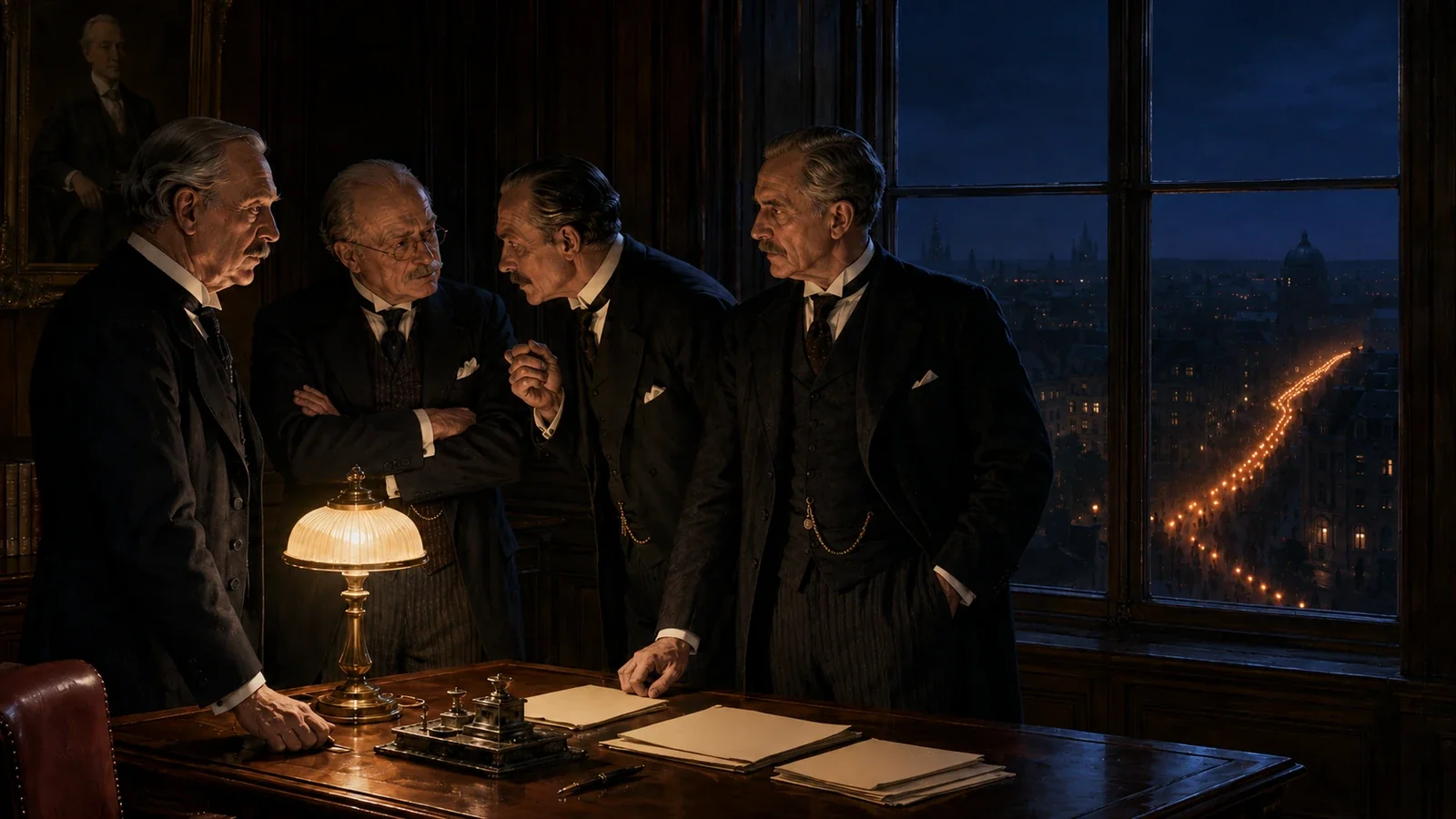
Von Papen now proposed a deal to Hindenburg: appoint Hitler as Chancellor, but surround him with conservative ministers who would control him. Von Papen himself would be Vice-Chancellor. Of the eleven cabinet posts, the Nazis would hold only three (including Hitler). Hindenburg was persuaded. Conservative grandees convinced themselves that an uncouth Austrian agitator could be managed by experienced politicians.
30 January 1933: Hitler appointed Chancellor
On 30 January 1933, Hindenburg appointed Hitler as Chancellor of Germany. That night, tens of thousands of Nazi SA and SS men marched through Berlin in a torchlight parade. Goebbels described it as "a dream come true."
Von Papen reportedly told a friend: "We have hired him." Within months, this complacency would be exposed as one of the great political miscalculations in history.
Key individual
Franz von Papen (1879–1969)
Von Papen was a conservative Catholic politician and former army officer who served as Chancellor for six months in 1932 and then negotiated the deal that made Hitler Chancellor. He believed he could control Hitler from the Vice-Chancellorship. He was wrong. Within months, Hitler had dismantled all the constitutional checks that von Papen had assumed would keep him in line. Von Papen survived the Nazi period in various diplomatic roles, was acquitted at Nuremberg, then convicted by a German denazification court. He lived until 1969 - long enough to see himself widely condemned as the man who put Hitler in power.
Why did Hitler become Chancellor?
Historians have debated this question extensively. The most defensible answer combines several factors:
The Depression: Without mass unemployment and economic despair, the Nazis would never have broken out of the fringe. The Depression was the necessary condition for their rise.
Nazi organisation and propaganda: The party was exceptionally well organised, with a national structure, effective propaganda, and a compelling (if terrifying) message.
Conservative miscalculation: Without the invitation from Hindenburg, mediated by von Papen, Hitler would not have become Chancellor. He was losing support in late 1932 - his appointment was a choice made by conservatives who thought they were being clever.
Weakness of opponents: The SPD and KPD could not unite. The democratic parties had no popular answer to the Depression.
Hitler himself: His extraordinary ability as a speaker, his messianic self-belief, and his political instincts cannot be discounted.
Why this matters for the exam
Was Hitler's appointment inevitable?
AQA questions sometimes ask whether Hitler's appointment was inevitable. The answer is no - and the evidence is November 1932, when Nazi support was falling. Hitler became Chancellor because conservative politicians made a choice. They were not forced to appoint him: they chose to, believing they could control him. A strong exam answer should show that Hitler's rise required both structural conditions (the Depression, weak opposition) AND specific political decisions (von Papen's deal, Hindenburg's agreement). Without any one of these elements, 30 January 1933 might not have happened.
Revision checklist
Before moving on, make sure you can answer:
- What happened in the July 1932 elections? How did Hindenburg respond to Hitler's demand to be Chancellor?
- What happened to Nazi support in the November 1932 elections?
- Who was von Papen? What deal did he propose to Hindenburg?
- Why did Hindenburg agree to appoint Hitler as Chancellor in January 1933?
- What did conservative politicians think would happen once Hitler was in power?
- Why were they wrong?
- Was Hitler's appointment as Chancellor inevitable? What evidence supports this?
- Which factor do you think was most important in Hitler's appointment as Chancellor?
What's New snippet
Article slug: gcse-history-germany-how-hitler-became-chancellor
Title: The backroom deal - how Hitler was handed power he couldn't win at the ballot box
By late 1932, Nazi vote share was actually falling - the party had peaked in July. Hitler became Chancellor not because he won an election outright, but because conservative politicians (above all Franz von Papen) convinced President Hindenburg that they could control him. It was one of the most catastrophic miscalculations in political history.