
There are three kinds of joint and their classification is dependant upon how the bones are joined together.
There is no cavity or movement in these joints and fibrous tissue holds the bones together. Examples of this are in the skull and pelvis.
As these joints are linked by cartilage there is some movement but it is very slight.
There is no cavity.
Examples of these joints can be found between the vertebrae and between the ribs and sternum.
These joints allow for greater ranges of movement and the type of movement will depend upon the type of joint between the bones.
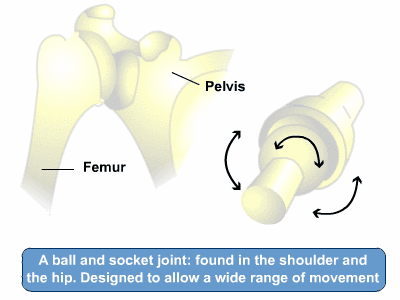
A ball and socket joint: found in the shoulder and hip. This joint allows the greatest range of movement.
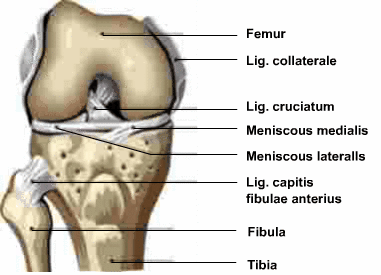
A hinge joint: found at the elbow and knee. The range of movement is limited to one plane just like a door hinge.
A condyloid joint: found at the wrist and ankle. Movement in two planes but not as great as the ball and socket.
A pivot joint: found in the neck. Part of the bone fits into another ring of bone as in take atlas and axis, allowing rotation of the head.
A saddle joint: found at the base of the thumb. This joint allows the thumb to be moved in two directions.
A gliding joint: found in the wrist and vertebral column. Two bones have a small range of movement limited by connecting ligaments.