
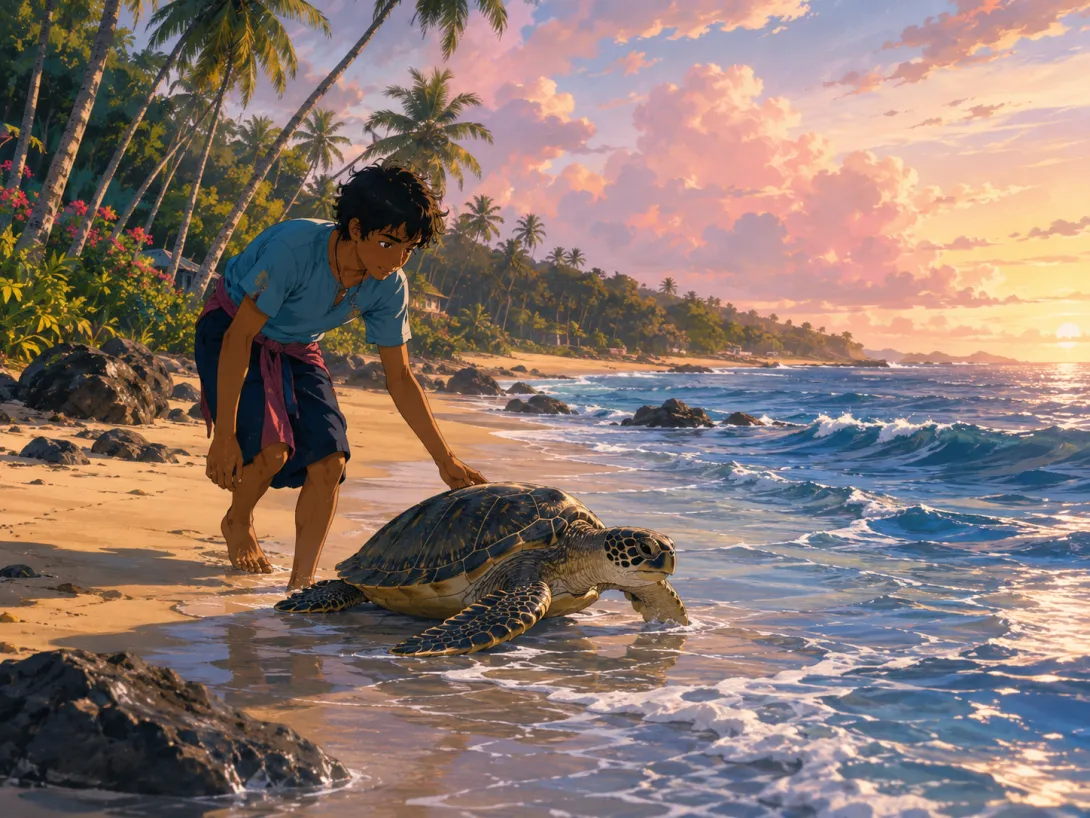
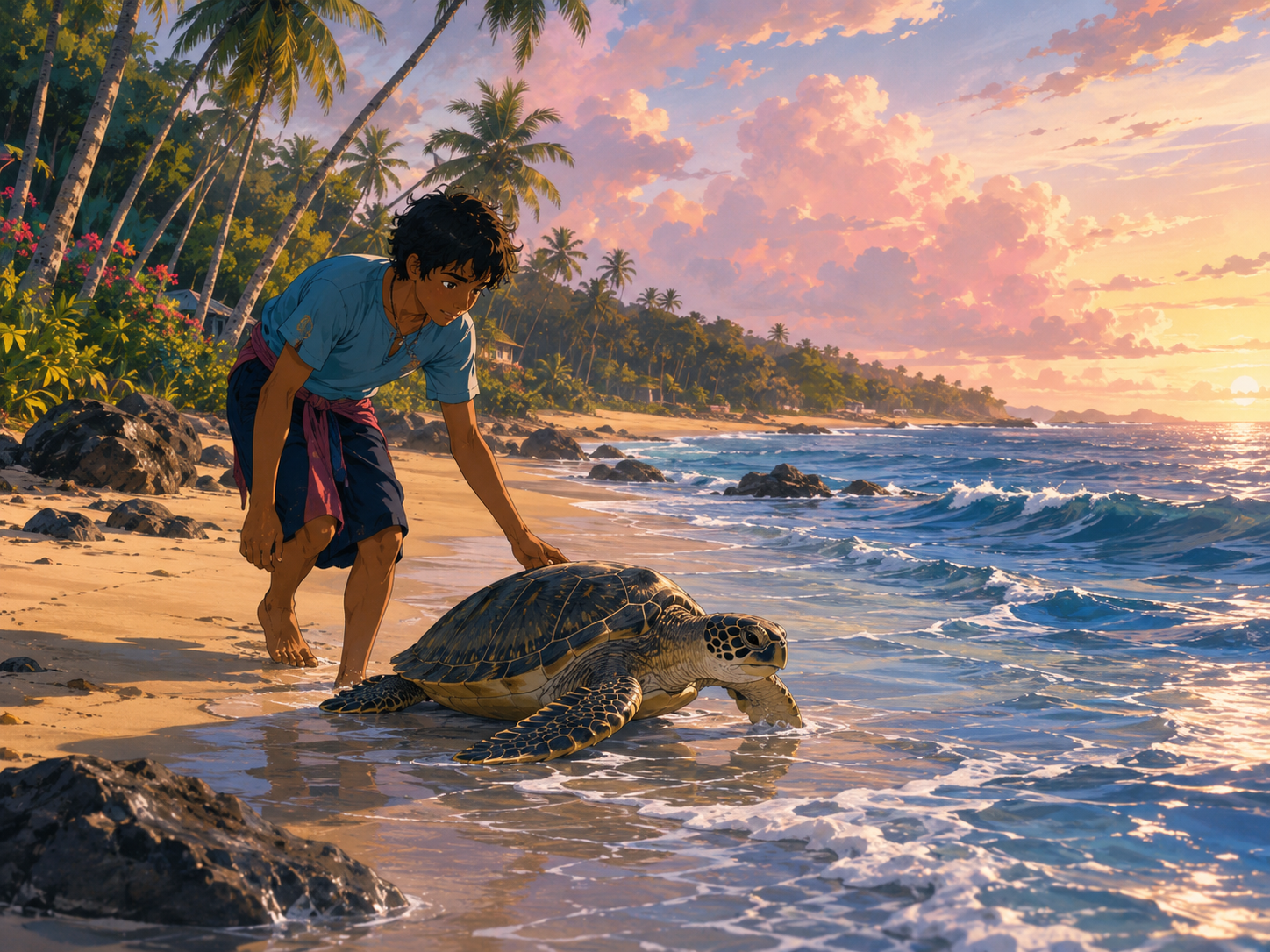
Every year on 16 June, the world marks World Sea Turtle Day. The date is not a coincidence. It was chosen to honour the birthday of one man – a naturalist from Alabama who dedicated his life to understanding these extraordinary reptiles and, in doing so, helped ensure they would have a future at all.
Sea turtles are not just a conservation story. They are a geography story, a biology story, a maths story, and – for some of you reading this – perhaps the beginning of a career story. Here is why they matter, what has threatened them, and the remarkable good news that gives genuine reason for optimism.
The Man Behind the Day: Archie Carr (born 16 June 1909)
Archibald Fairly Carr Jr. was born in Mobile, Alabama, on this day in 1909 – 117 years ago today. He became one of the most important naturalists of the twentieth century, not only through laboratory work, but through years of fieldwork in places few scientists had bothered to visit: the remote beaches of Costa Rica, the coral atolls of the Caribbean, and the mangrove coasts of Central America.
Carr spent decades studying green turtles, following their remarkable migrations across thousands of kilometres of open ocean. In 1956, he published The Windward Road – a book that combined scientific rigour with vivid, urgent writing that changed how people felt about the natural world. It worked. At a time when sea turtles were being harvested almost to extinction – their eggs dug up on beaches, their shells sold as ornaments, their meat served in restaurants across the world – Carr's writing created a constituency of people who cared.
In 1959, he co-founded the Caribbean Conservation Corporation – the organisation now known as the Sea Turtle Conservancy, the oldest sea turtle research and conservation body in the world. His approach was simple: understand the animal first, deeply and patiently. Everything else follows from that.
"The question is whether any civilisation can wage relentless war on life without destroying itself, and without losing the right to be called civilised."
- Archie Carr, The Windward Road, 1956
World Sea Turtle Day marks his birthday because it is inseparable from his legacy. Without Carr, several of the species below might already be extinct.
Ancient Mariners: The Seven Species
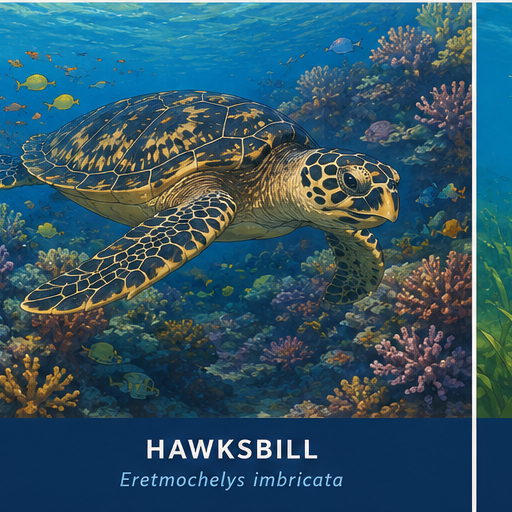
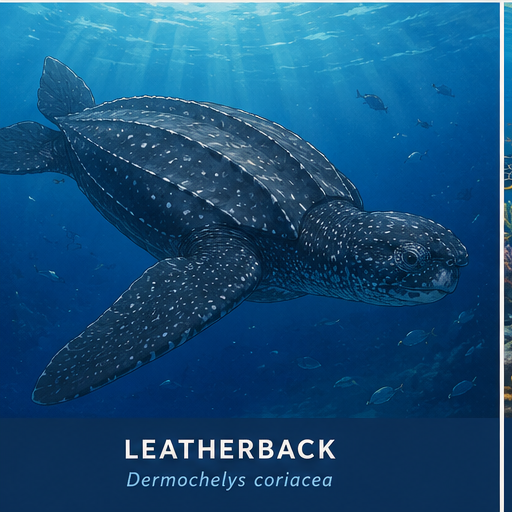
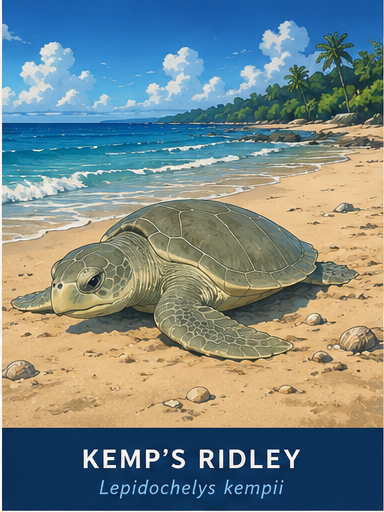
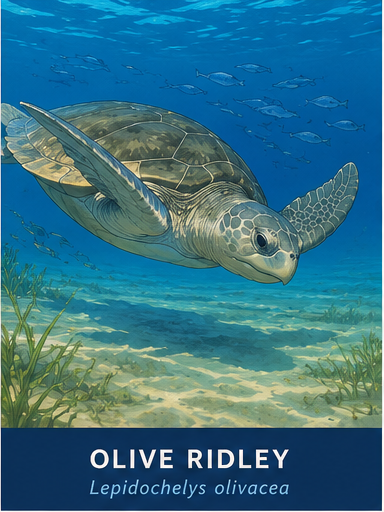
All sea turtles belong to one of two families in the order Testudines. Six of the seven species belong to the family Cheloniidae. The seventh – the leatherback – is so different from the others that it has its own family entirely: Dermochelyidae. Together, they represent a lineage that has survived on Earth for more than 100 million years. Sea turtles outlived the dinosaurs. Until humans, nothing had managed to threaten them seriously.
The map below shows the general distribution of each species across the world's oceans.
The Good News: A Conservation Story That Actually Works
In ecology, good news is rare enough that it deserves to be celebrated. Here is some.
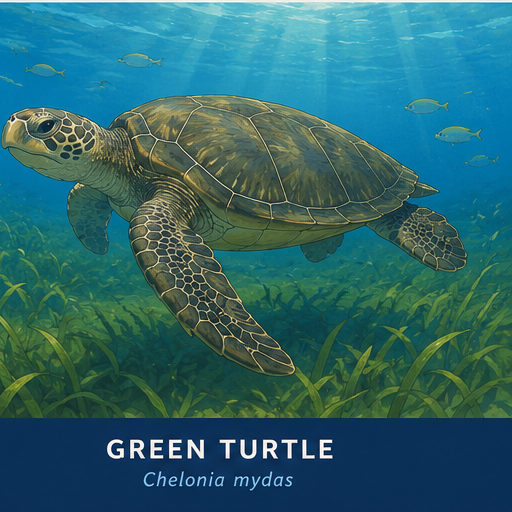
The green turtle – the species that Archie Carr spent his life studying – has made a remarkable recovery in several key populations. In Florida, where the Archie Carr National Wildlife Refuge protects 35 kilometres of nesting beach on the Atlantic coast, nesting surveys have recorded extraordinary increases. In the late 1980s, a typical season might see a few hundred nesting females. In recent years, counts have exceeded 37,000 nests per season on the refuge alone. That is not a rounding error. That is a population-level recovery.
In Hawaii, green turtle nesting has increased by over 50% over three decades. On the Great Barrier Reef, two genetically distinct populations – one nesting in the northern reef, one in the southern – have both shown consistent recovery since Australia introduced strict protections in the 1970s.
Why did it work? Because the threats were identified, and specific, targeted actions were taken over decades – not months.
- Commercial harvesting of turtles and their eggs was banned in most countries
- Nesting beaches were legally protected under national and international law
- Turtle Excluder Devices (TEDs) – trapdoors fitted to trawl nets – became mandatory in some fisheries, allowing turtles to escape
- CITES (Convention on International Trade in Endangered Species) restricted the global trade in turtle shells and products
- Beach lighting guidelines reduced hatchling disorientation near built-up coastlines
Conservation works when it is science-led, internationally co-ordinated, and sustained over decades. Green turtles are the proof.
How Did Things Get So Bad?
Understanding the recovery requires understanding the collapse. The threats to sea turtles are not ancient history – they are ongoing, and some are getting worse.
Overharvesting – the original problem
For centuries, sea turtles were harvested for their meat, eggs, fat, and shells. Turtle soup was a Victorian delicacy. Green turtle fat was used in cosmetics. Hawksbill shells – beautifully patterned – were carved into jewellery, combs, and spectacle frames. The scale was industrial: in some Caribbean ports in the eighteenth century, ships carried hundreds of live turtles stacked on their backs in the holds, surviving on seawater until they were eaten.
Egg collection – a tension that persists
In many countries across Southeast Asia, the Caribbean, and the Pacific, sea turtle eggs have been a traditional food for generations. In some places – parts of Malaysia, Nicaragua, and coastal Mexico – collection continues, both legally and illegally. This creates genuine tension between conservation science and the rights of coastal communities whose cultures and livelihoods have long been tied to turtles.
There is no easy answer here. The IUCN and organisations like the Sea Turtle Conservancy argue that collection at historical rates is no longer sustainable given depleted population levels. Many local communities counter that they should not bear the entire burden of a crisis they did not cause. This is a genuine ethical debate happening right now, not a resolved one.
Bycatch – the accidental killer
Even where direct harvesting has stopped, turtles die in fishing gear. Longline fishing – lines carrying thousands of baited hooks stretched for kilometres – catches turtles that dive to the same depths as target species like tuna and swordfish. Bottom trawling catches turtles that forage near the seabed. The Sea Turtle Conservancy estimates hundreds of thousands of sea turtles are caught as bycatch globally each year. Many drown before they can be released.
Coastal development – beaches as real estate
Sea turtles return to nest on the same beaches where they were born – a behaviour called natal philopatry. The word derives from the Greek for "homeland" (patria) and it is a precise instinct honed over millions of years. If those beaches are built over with hotels, sea walls, or roads, there is nowhere to nest. Artificial lighting on and near beaches disorients hatchlings, who navigate toward the sea using light reflected off the water's surface. In built-up areas, they turn toward streetlights and car parks instead, where they die of dehydration or are run over.
Climate change – the slow emergency
Here is something that should alarm anyone who has studied GCSE science: the sex of a sea turtle hatchling is determined not by chromosomes but by the temperature of the sand in which the egg incubates. Warmer sand produces more females. Cooler sand produces more males. As global temperatures rise, researchers in Florida and Queensland are recording a dramatic shift in sex ratios – in some populations, up to 99% of hatchlings are female. A population that cannot reproduce cannot survive, even if individual turtles face no other threat. Climate change acts directly on sea turtle biology, and no conservation intervention can fully offset that pressure.
Plastic pollution
Sea turtles are visual hunters. Green turtles eat seagrass and algae. Leatherbacks eat jellyfish. A translucent plastic bag drifting in the water looks, to a leatherback, exactly like a jellyfish. Studies have found microplastics and plastic debris in the gut contents of sea turtles from every ocean on Earth.
The Tsunami and the Turtles: Sri Lanka, 2004
On 26 December 2004, a magnitude 9.1 earthquake off the coast of northern Sumatra triggered the Indian Ocean Tsunami – waves that crossed the ocean and killed more than 230,000 people across fourteen countries. It was one of the deadliest natural disasters in recorded history.
Sri Lanka was among the worst-affected countries. The south-western coastline – where several of the island's most important sea turtle rehabilitation and breeding facilities were located – was directly in the path of the waves.
The village of Kosgoda, on Sri Lanka's south-west coast, had been a sea turtle conservation site since the 1980s. The Kosgoda Sea Turtle Conservation Project – run by the Turtle Conservation Project – had established hatcheries on the beach where eggs were protected from predators and poachers until hatching, and where injured turtles were rehabilitated before release. The 2004 tsunami destroyed these facilities. Thousands of eggs were lost. Juvenile turtles held in recovery tanks drowned. The physical infrastructure built over two decades was washed away in minutes.
The aftermath told a more complicated story. International attention following the tsunami brought significant funding to Sri Lanka's conservation efforts. New facilities were built. The number of organisations working on sea turtle conservation on the island actually increased in the years after 2004. The Kosgoda facilities were rebuilt and expanded.
The sociology-of-disaster lesson is hard but clear: the same event that destroyed vital conservation infrastructure also generated international solidarity and funding that later strengthened it. In Sri Lanka, conservation became a story of communities and international networks responding under pressure – and rebuilding something more resilient than what existed before.
What Does This Have to Do with Your Subjects?
🌍 Geography
Sea turtles are a case study in coastal ecosystems, the impacts of tourism, and sustainable development. Ecotourism built around nesting sites generates income for coastal communities without destroying the habitat. The 2004 Indian Ocean Tsunami is a classic Geography exam topic – causes, immediate effects, long-term effects, and management – and Kosgoda is an under-examined case study within it.
🔬 Biology
Sea turtles offer vivid examples of adaptation (temperature-dependent sex determination, magnetic field navigation, multi-hour breath-holding), food webs (they are both consumers and prey, and their nesting sites fertilise coastal vegetation), and conservation biology (population monitoring, protected species law, breeding programmes).
📊 Maths
Conservation biologists spend much of their time doing maths. Population statistics, percentage change, sampling techniques, and trend analysis are all standard tools. Florida green turtle nesting: from approximately 250 nests per season in 1989 to over 37,000 in recent years. Calculate the percentage increase. Consider what that exponential recovery curve looks like on a graph – and what it implies about the power of sustained intervention.
🏛️ Sociology & Ethics
The tension between conservation and cultural rights – over egg harvesting, fishing practices, and who bears the cost of protecting an endangered species – is a real ethical debate right now. It involves indigenous rights, international law, global inequality (who caused the collapse, who is asked to give something up to fix it?), and the role of organisations like the UN and CITES.
💼 Careers
If any of this has sparked something – consider where a career in this space might lead. Marine biology is the obvious path, but the field touches many others: environmental policy, ecotourism management, data science (population monitoring generates enormous datasets), science communication, and international development. Archie Carr demonstrated that writing and communication are conservation tools as powerful as any field data.
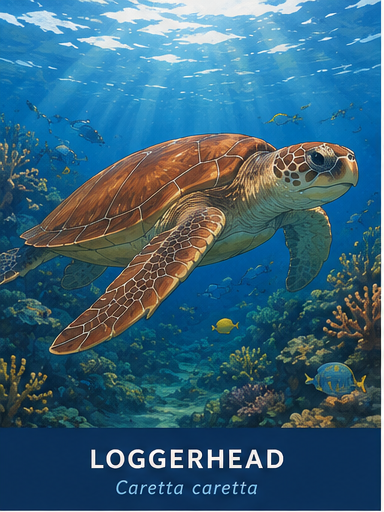
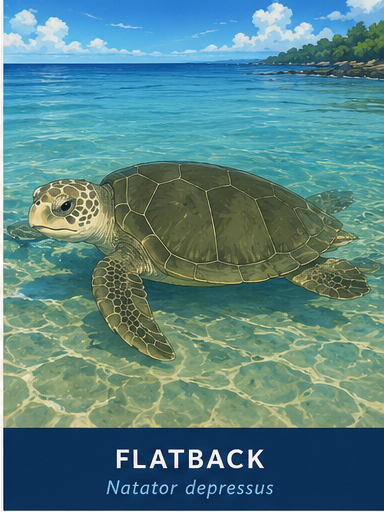
Seven Species: The Data
What Can You Do?
This is the section of conservation articles that often feels like a list of impossible tasks. But a few things genuinely matter.
Reduce single-use plastic. Not because using a reusable bag alone will solve the problem, but because the scale of the problem is the aggregate of millions of individual decisions – and that aggregate does change when enough of those decisions shift.
If you travel to a nesting site, be careful. Sea turtle ecotourism is real and valuable, but poorly managed tourism is harmful. Crowding around nesting females, using flash photography, and approaching hatchlings on the beach – all of these disrupt the very behaviour visitors have come to witness. Support operators that follow IUCN guidelines.
Check what you are eating. Some seafood is caught using methods with high sea turtle bycatch rates. The Marine Stewardship Council and similar bodies certify fishing operations that use turtle-safe practices.
And if you are thinking about what to do with your life – the problems outlined above will need solving for the next several decades. The people who solve them will be scientists, policymakers, communicators, economists, and engineers. Some of them are in secondary school right now.
Archie Carr was born 117 years ago today. He made sea turtle conservation the work of his life at a time when almost no one thought it mattered. The world he helped to create means that green turtles are nesting in their thousands on Florida beaches tonight.
That is what sustained, patient, science-led effort looks like.
Happy World Sea Turtle Day. 🐢
---